
Australia Joins US-Led Pact to Fortify Global AI Supply Chains
Australia has joined a 10-nation coalition, including the US, Japan, and India, to sign a landmark declaration aimed at securing AI supply chains. The agreement focuses on controlling the strategic materials and technologies essential for AI infrastructure, effectively treating AI hardware as critical national security assets. This move signals a departure from the open-market approach to technology, pivoting instead toward "technological sovereignty" within a Western-aligned bloc. The agreement is a response to increasing geopolitical tensions and the fragility of global logistics, particularly concerning semiconductors and rare minerals. While the move strengthens regional security and aligns Australia with key strategic partners, it also raises questions about potential increases in development costs and the balkanization of the global tech landscape. Impacted parties include hardware manufacturers, AI researchers, and government agencies tasked with overseeing critical infrastructure and trade controls.
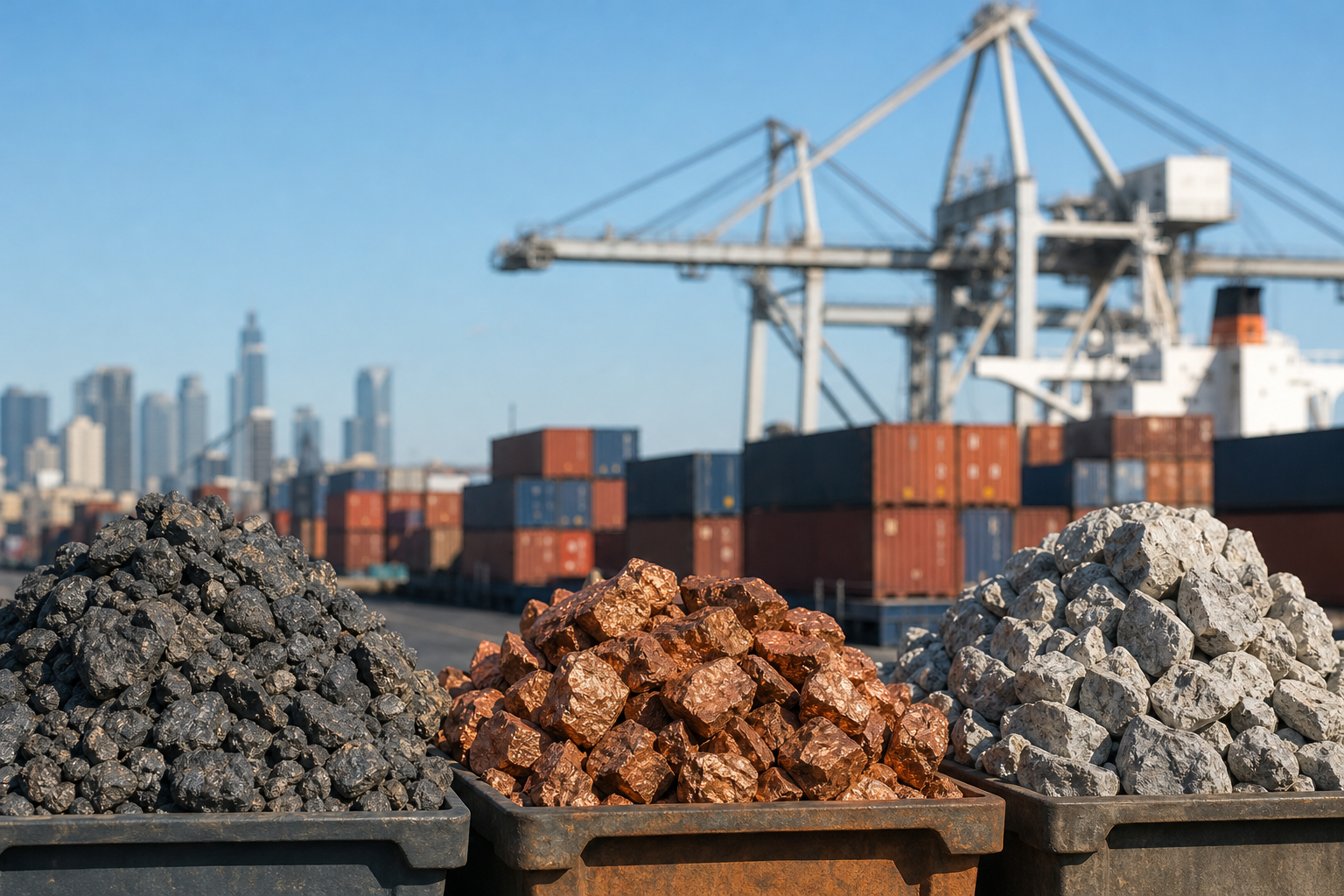
Opening Insight
The digital age has entered its Westphalian phase. For years, the artificial intelligence narrative centered on the "borderless" nature of code—the idea that a developer in Brisbane and a researcher in Tokyo could collaborate across a frictionless cloud. That era is ending. The signing of a US-led declaration on AI supply-chain controls by Australia, Japan, India, and seven other nations signals a definitive shift toward technological sovereignty and geopolitical fortification.
This is not merely a trade agreement; it is the construction of a technological moat. By aligning on the materials, infrastructure, and intellectual property that underpin AI, these nations are acknowledging that the "brain power" of the future is physically tethered to the ground. If you control the silicon, the rare earth minerals, and the high-end fabrication plants, you control the cognitive output of the next century. Australia’s signature on this document marks a pivot from passive consumer to strategic gatekeeper in the global AI hierarchy.
What Actually Happened
In a move that underscores the growing anxiety over technological dependencies, Australia joined a coalition of 10 nations to sign a US-led declaration aimed at securing the AI supply chain. The agreement, which includes major regional powers like India and Japan, focuses on the strategic technologies and raw materials required to sustain and advance AI infrastructure.
While the specific mechanics of the declaration remain focused on "strengthening controls," the intent is clear: to insulate the democratic AI ecosystem from external vulnerabilities. This involves a shared commitment to overseeing the flow of critical components—ranging from high-end semiconductors to the specific minerals necessary for their production.
The timing is significant. This multilateral agreement arrives as global powers grapple with the fragility of high-tech logistics. The declaration establishes a framework for cooperation that transcends simple commerce, moving into the realm of collective security. It signals that AI is now officially classified as "critical infrastructure," subject to the same level of scrutiny and protection as energy grids or water supplies.
Why It Matters Right Now
The immediate impact of this declaration is a hardening of the "Tech Cold War" lines. For Australia, the decision to sign is a calculated risk. As a major exporter of raw materials and a growing hub for innovation, Australia is positioning itself as a reliable node in the Western-aligned AI network. This matters right now because the velocity of AI development has outpaced the legal and physical structures designed to contain it.
Without secure supply chains, AI is a house built on sand. Current generative AI models and large-scale industrial AI require immense computing power, which in turn requires specific hardware produced in a handful of facilities globally. Any disruption to this supply chain—whether through geopolitical tension, trade embargoes, or logistical failure—could stall national progress overnight.
By signing this declaration, Australia is seeking to guarantee its seat at the table when resources are allocated. It is a preemptive strike against future shortages and a signal to the private sector that the government is prepared to intervene in markets to ensure technological resilience. It also places a spotlight on Australia's domestic capabilities, forcing a conversation about how much of the AI stack can—and should—be built on Australian soil.
Wider Context
To understand this declaration, one must look at the broader landscape of global AI governance and competition. We are seeing a fragmented world order where "tech-blocs" are becoming the new trade blocs. The US-led initiative is a direct response to the consolidation of AI resources by other global actors, most notably China.
Australia’s involvement coincides with a period of increased domestic focus on technological self-reliance. Recently, the Australian government announced an $81 million boost to drive innovation and AI, signaling a desire to move up the value chain from mineral extraction to high-level development. Furthermore, recent data security concerns, such as the review prompted by Medicare breaches, have heightened the public and political demand for more robust AI collaboration and oversight.
The inclusion of India and Japan is equally telling. Japan remains a titan in hardware and robotics, while India offers an unparalleled scale of human capital and a growing tech ecosystem. Together with Australia and the US, this group forms a "Tech Quad" capable of influencing global standards. This isn't just about preventing others from getting technology; it’s about ensuring the signatories can continue to innovate without asking for permission from hostile or volatile neighbors.
Expert-Level Commentary
From a strategic perspective, this declaration represents the "securitization" of the AI stack. Analysts observe that for decades, supply chain management was about efficiency and cost-reduction. In the AI era, it is about resilience and ideology. The agreement suggests that the signatories no longer view AI components as mere commodities, but as instruments of national power.
However, there is a tension inherent in this approach. By tightening controls and focusing on "trusted partners," nations risk slowing down the very innovation they seek to protect. AI thrives on the open exchange of ideas and the global scale of manufacturing. If the supply chain becomes too balkanized, the cost of hardware may rise, and the pace of iteration may fall.
Furthermore, the declaration raises questions about the definition of "strategic materials." Does this include the data itself? In the context of recent Australian debates over data privacy and the demand for AI collaboration following major breaches, the definition of "supply chain" may eventually expand to include the ethical and secure flow of information, not just the hardware that processes it. The challenge for Australia will be balancing its role as a secure partner with the need to remain an open, competitive economy.
Forward Look
The signing of this declaration is a beginning, not an end. In the coming months, we should expect to see more granular policies emerging from Canberra that reflect these new commitments. This could include stricter export controls on certain technologies, increased vetting of foreign investments in the Australian tech sector, and new incentives for domestic semiconductor and hardware startups.
Globally, this 10-nation group will likely seek to set international standards for AI safety and hardware integrity. We may see the development of a "trusted foundry" system, where chips and components are certified as being free from tampering or backdoors. Australia’s $81 million innovation boost is likely just the first installment in a much larger, long-term investment strategy to align domestic output with these international security requirements.
The geopolitical friction will also likely intensify. As this bloc solidifies its controls, excluded nations will likely accelerate their own efforts to build parallel supply chains. We are moving toward a world of "Red AI" and "Blue AI"—two distinct technological ecosystems with different hardware, different data standards, and different ethical frameworks.
Closing Insight
AI is often discussed as an ethereal force—a phantom in the machine. This declaration reminds us that AI is profoundly physical. It lives in silicon, it is powered by rare minerals, and it is transported through shipping lanes. By securing the supply chain, Australia and its allies are acknowledging that the future of intelligence is inseparable from the reality of geography.
The era of globalized, frictionless tech is being replaced by a new paradigm of "strategic autonomy." For Australia, the path forward involves a delicate balancing act: maintaining the security of the alliance while fostering the domestic creativity necessary to lead. The moat has been dug. Now, the question is what kind of future Australia will build within its walls.