
Vetted: The Secret Hand Guiding Australia’s New AI Regulations
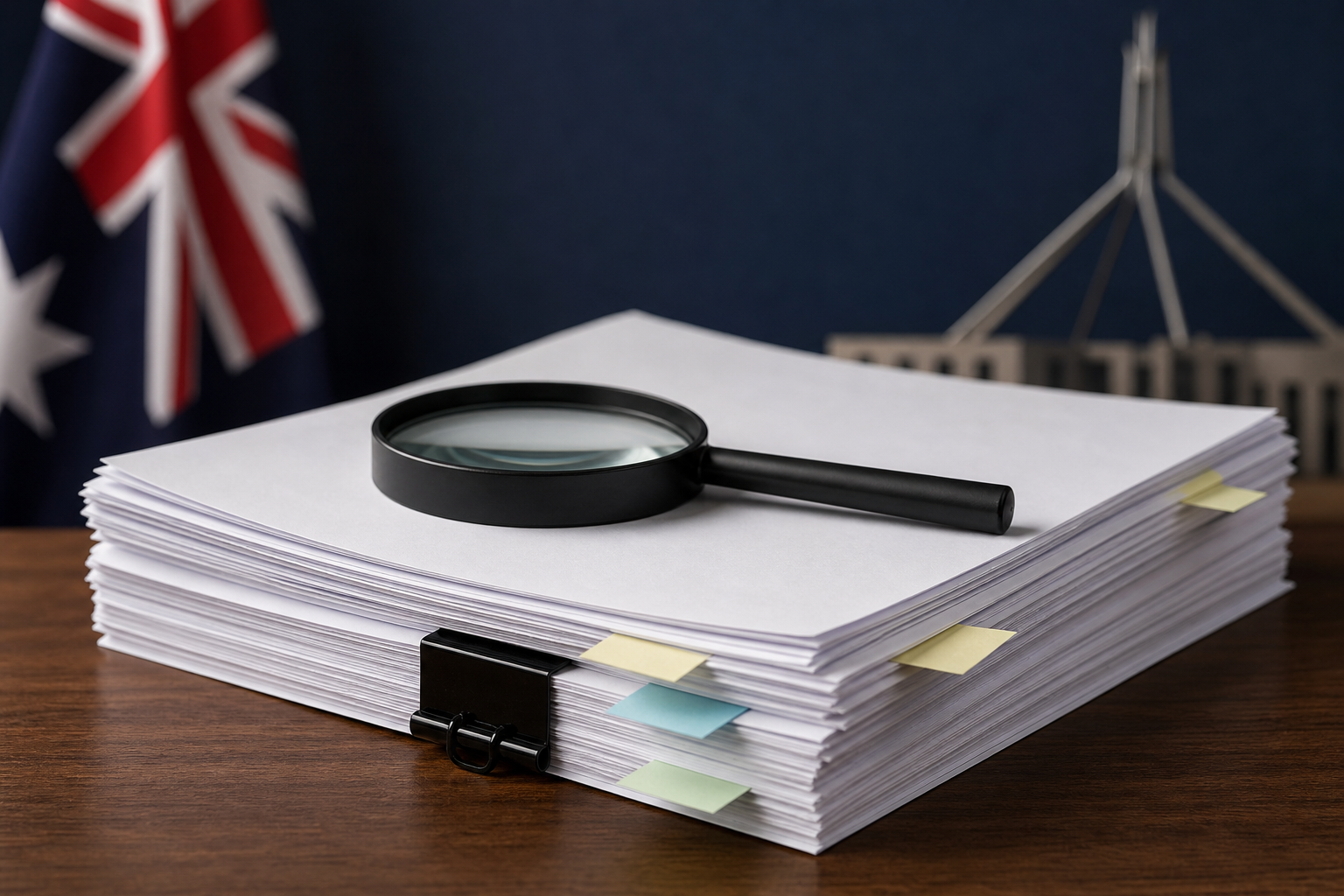
Australia's federal government and opposition have faced intense scrutiny following revelations that the Prime Minister’s Office (PMO) reviewed and "vetted" draft recommendations from a bipartisan parliamentary inquiry into AI. The inquiry’s proposals—ranging from the creation of independent safety watchdogs to significant copyright law reforms and increased access for security agencies—are intended to form the backbone of Australia's AI regulatory framework. Critics argue this executive involvement compromises the independence of the parliamentary process, while both Labor and the Coalition maintain it was a standard procedure for national security and policy alignment. This development highlights a global shift where AI policy is increasingly treated as a matter of high-level statecraft rather than just industry regulation. The debate now centers on whether Australia can maintain public trust and foster innovation while the executive branch exerts tight control over the technology's legislative guardrails.
Opening Insight
The tension between democratic transparency and executive oversight has found a new, high-stakes battleground: the regulation of artificial intelligence. In Australia, the integrity of a pivotal parliamentary inquiry is under scrutiny following revelations that the Prime Minister’s Office (PMO) reviewed draft recommendations before they were finalized. This is not merely a procedural skirmish; it is a signal of how central AI has become to national sovereignty and economic security.
When the machinery of government begins to massage the guardrails intended to govern the most transformative technology of the century, the optics are inherently fraught. The incident suggests that AI is no longer just a niche policy area managed by technologists; it is now a core pillar of statecraft, subject to the same political pressures, security vetting, and strategic maneuvering as defense or fiscal policy. The core question is whether this "vetted" approach provides necessary stability or dilutes the independent oversight required to keep Silicon Valley’s giants in check.
What Actually Happened
Australia’s parliamentary inquiry into AI was designed to provide a bipartisan roadmap for the nation’s technological future. However, recent reporting revealed that draft recommendations from the inquiry were sent to the Prime Minister’s Office for review prior to their public release. This sparked immediate allegations of improper interference, raising concerns that the independence of the committee—intended to act as a check on executive power—had been compromised.
Both the Labor government and the Coalition opposition have moved swiftly to reject these claims. They characterize the process as a standard "fact-checking" and "vetting" exercise, typical for reports involving sensitive national security and economic considerations. The recommendations in question are significant. They include the establishment of independent safety watchdogs for AI companies, enhanced access for national security agencies to monitor high-risk systems, and sweeping reforms to copyright law to address the unauthorized training of AI models.
The controversy centers on a "heavily vetted" letter and draft report that underwent scrutiny by the PMO. Critics argue this creates a feedback loop where the government essentially approves the recommendations that it will later pretend to be advised by. Defenders of the process argue that in an era of rapid AI advancement, ensuring policy alignment between the legislature and the executive is a pragmatic necessity rather than a subversion of democracy.
Why It Matters Right Now
The stakes for Australia are uniquely high. As a medium-sized economy, the nation faces a choice: become a passive consumer of foreign AI technologies or establish itself as a regulated, ethical hub for innovation. The recommendations regarding "independent safety checks" are particularly urgent. As AI systems move from simple chatbots to autonomous agents capable of interacting with critical infrastructure, the lack of a clear regulatory framework creates a vacuum of accountability.
Furthermore, the focus on "stronger access for security agencies" highlights the shift in AI discourse from ethics to defense. There is a growing consensus within the Australian government that AI is a dual-use technology. The same algorithms that optimize supply chains can be weaponized for cyber-warfare or mass disinformation. By vetting these recommendations, the PMO is signaling that AI regulation is now a matter of national security, not just consumer protection.
This happens against a backdrop of immense financial pressure. Recent global market analysis shows that while AI capital expenditure continues to skyrocket, the timeline for significant revenue returns remains a point of intense debate. For the Australian government, getting the regulation right means balancing the need to attract this investment with the responsibility to protect its citizens from the "black box" nature of proprietary AI systems.
Wider Context
Australia is not acting in a vacuum. The global regulatory landscape is currently a fragmented patchwork. The European Union has opted for the comprehensive, risk-based AI Act, while the United States has largely relied on executive orders and voluntary commitments from industry leaders. Australia’s inquiry represents an attempt to find a "middle way"—leveraging existing legal frameworks while creating new, targeted interventions.
The copyright element of the inquiry is particularly noteworthy. Australians appear to be giving a "green light" to changes in copyright law that would facilitate the local training of AI models. This is a departure from the more litigious environment in the US, where creators are locked in a stalemate with tech firms over fair use. If Australia can successfully reform copyright to allow for "local AI training" while protecting creators, it could become an attractive testing ground for developers who are wary of the legal minefields in other jurisdictions.
However, there is a socio-economic shadow over these developments. Recent analysis suggests that AI could widen the gap between the technologically literate and those left behind. If the government’s regulatory response is seen as being dictated by the PMO rather than an independent body, it may struggle to gain the public trust necessary to implement the structural changes AI will demand of the labor market.
Expert-Level Commentary
The intervention by the PMO reflects a broader trend of "centralized innovation management." In the past, parliamentary inquiries functioned as a bottom-up approach to policy. In the AI era, the sheer speed of development and the complexity of the technology have led to a top-down consolidation of power. Political leaders are hesitant to leave AI policy to the "whims" of independent committees because the geopolitical costs of a misstep are perceived as too high.
Andrew Charlton, a key figure in the Australian Labor party and a prominent voice on AI policy, has emphasized that the nation cannot afford to be a laggard. In recent speeches, Charlton has framed AI regulation as a race for productivity. The vetting of the inquiry’s report suggests that the government is trying to ensure that the "independent watchdogs" proposed by the committee do not inadvertently stifle the very innovation they are meant to oversee.
There is also the matter of the "Coalition's concurrence." The fact that both major parties have dismissed the interference claims suggests a bipartisan consensus on the "securitization" of AI. When both sides of the aisle agree that the Prime Minister’s Office should have a final look at the rules of the road, it indicates that AI has reached the status of a "permanent state" interest—much like intelligence sharing or foreign investment reviews.
Forward Look
In the coming months, the final report from the inquiry will likely be tabled, and the focus will shift from the process to the substance of the laws. We should expect to see the formalization of an AI safety commissioner or a similar body, though its "independence" will be a point of ongoing debate. The degree to which this body can compel big tech companies to reveal their training data or algorithmic weights will be the true test of the inquiry's impact.
The copyright reforms will also be a critical watchpoint. If the government moves to allow local training, we may see an influx of AI startups to Australian shores, drawn by legal clarity. Conversely, if the security agencies are granted too much "backdoor" access to AI systems, it could deter international firms concerned about intellectual property theft or government overreach.
We are also entering a phase where the "AI Capex vs. Revenue" debate will force the government’s hand. If the global AI boom begins to cool because companies cannot monetize their massive investments, the Australian government may be pressured to roll back some of the proposed safety checks to lower the cost of compliance for local firms.
Closing Insight
The controversy surrounding the vetting of Australia’s AI inquiry is a preview of the "new normal" in governance. As technologies become more powerful, the space for independent, transparent deliberation shrinks in favor of controlled, strategic management. This is the paradox of AI regulation: we need independent oversight to ensure safety, yet the strategic importance of the technology makes governments unwilling to leave that oversight to chance.
Australia’s path forward will be a litmus test for other mid-tier powers. If the resulting regulations are robust and fair, the "vetting" will be forgotten as a mere procedural hiccup. But if the regulations fail to protect citizens or if the "independent watchdogs" prove to be toothless, the PMO’s early involvement will be remembered as the moment the guardrails were compromised before they were even built. The true measure of this inquiry won't be in who saw the draft first, but in whether the final laws can actually govern the ungovernable.